FIND THE RIGHT IMPORT-EXPORT BUSINESS BEFORE YOU INVEST YOUR MONEY

Frequently Asked Questions
Not necessarily. This guide helps you explore different business opportunities and understand starting investment, typical margin ranges, costing and working-capital requirements, so you can evaluate an opportunity before committing your money.
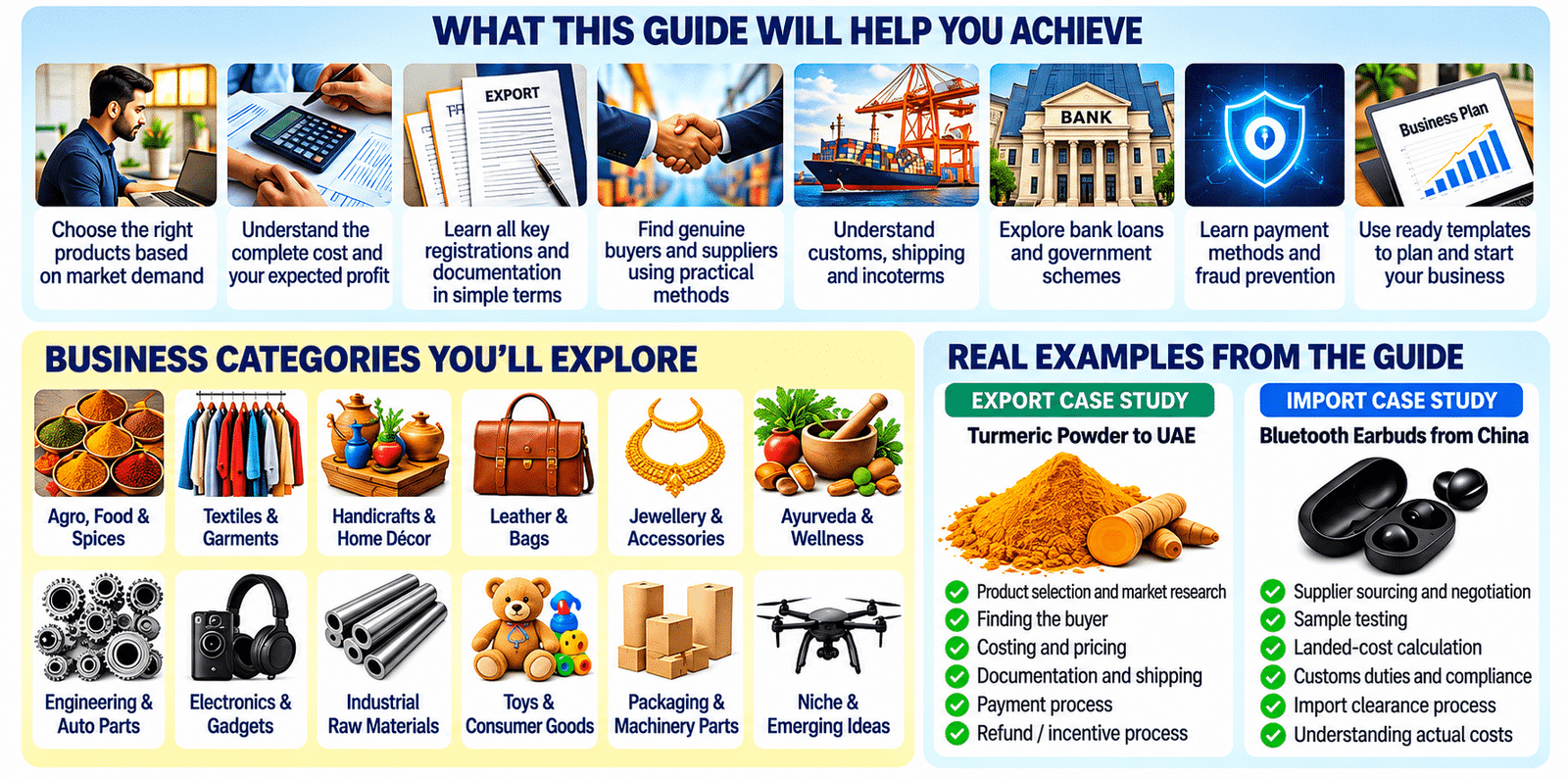
You’ll learn the practical process covering business registration, IEC, GST, RCMC, AD Code, documentation, customs clearance, shipping, financing, buyer/supplier discovery, payment methods and GST/duty-related procedures.
Yes. The guide includes a dedicated chapter with profitable Import & Export business ideas across categories such as food and spices, textiles, handicrafts, leather, jewellery, wellness, engineering products, electronics, industrial materials and consumer goods.
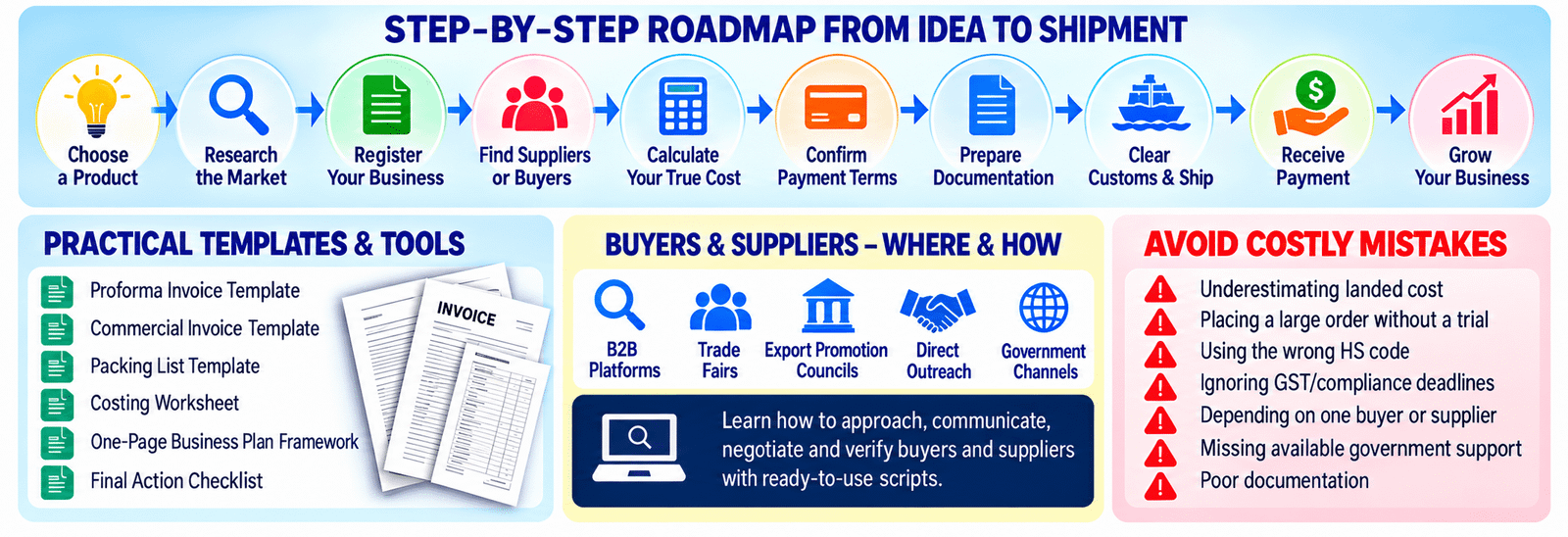
The guide explains practical buyer and supplier discovery methods, including B2B platforms, trade fairs, Export Promotion Councils, direct outreach and government/institutional channels. It also includes guidance on verifying buyers and identifying common trade-fraud warning signs.
Yes. It includes Proforma Invoice, Commercial Invoice and Packing List templates, a costing worksheet, a business-plan framework, supplier negotiation scripts and practical import/export case studies.
No. The guide provides practical information and planning ranges, but actual investment requirements and margins depend on the product, sourcing, buyer, quality, logistics and market conditions. Readers should verify current regulations, rates and scheme eligibility before committing capital.
Beginners can explore products with consistent demand, manageable shipping requirements, reasonable margins, and relatively simple handling. The eBook provides ideas and factors you can consider when selecting products.
Not necessarily. Depending on the business model and product, some entrepreneurs may begin with direct sourcing, small quantities, third-party logistics, or other arrangements instead of maintaining their own warehouse.
Common areas to watch include inadequate market research, choosing unreliable business partners, ignoring shipping and documentation requirements, underestimating total costs, and committing to large orders before validating demand. Careful research and small-scale testing can help reduce avoidable risks.