SECURE YOUR FUTURE WITHOUT UNREALISTIC SAVINGS TARGETS

Frequently Asked Questions
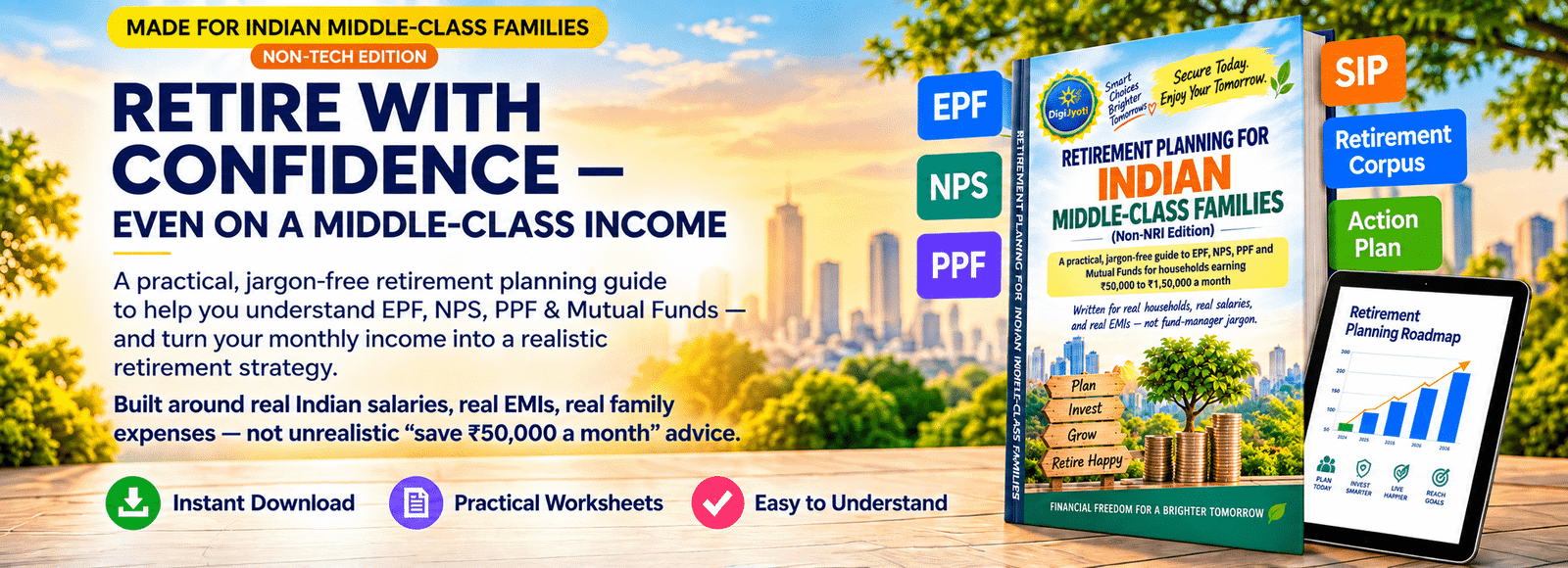
This e-book is specially designed for Indian middle-class families, particularly households earning around ₹50,000 to ₹1,50,000 per month. It is written for real-life situations involving EMIs, children’s education, household expenses, family responsibilities, and long-term savings.
No. The guide uses simple, practical language instead of complicated financial jargon. It explains retirement planning step by step so that ordinary working families can understand their options and take informed action.
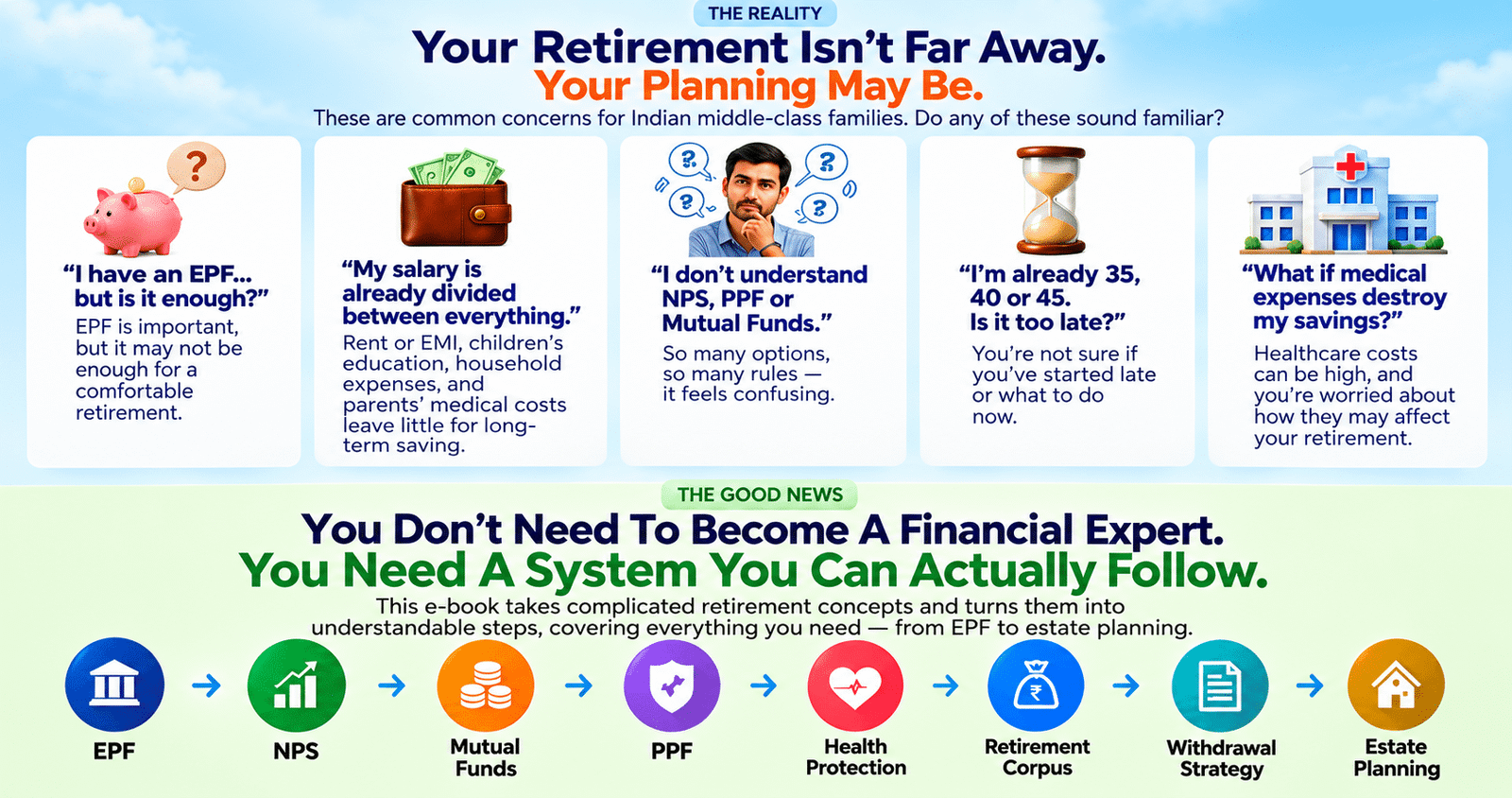
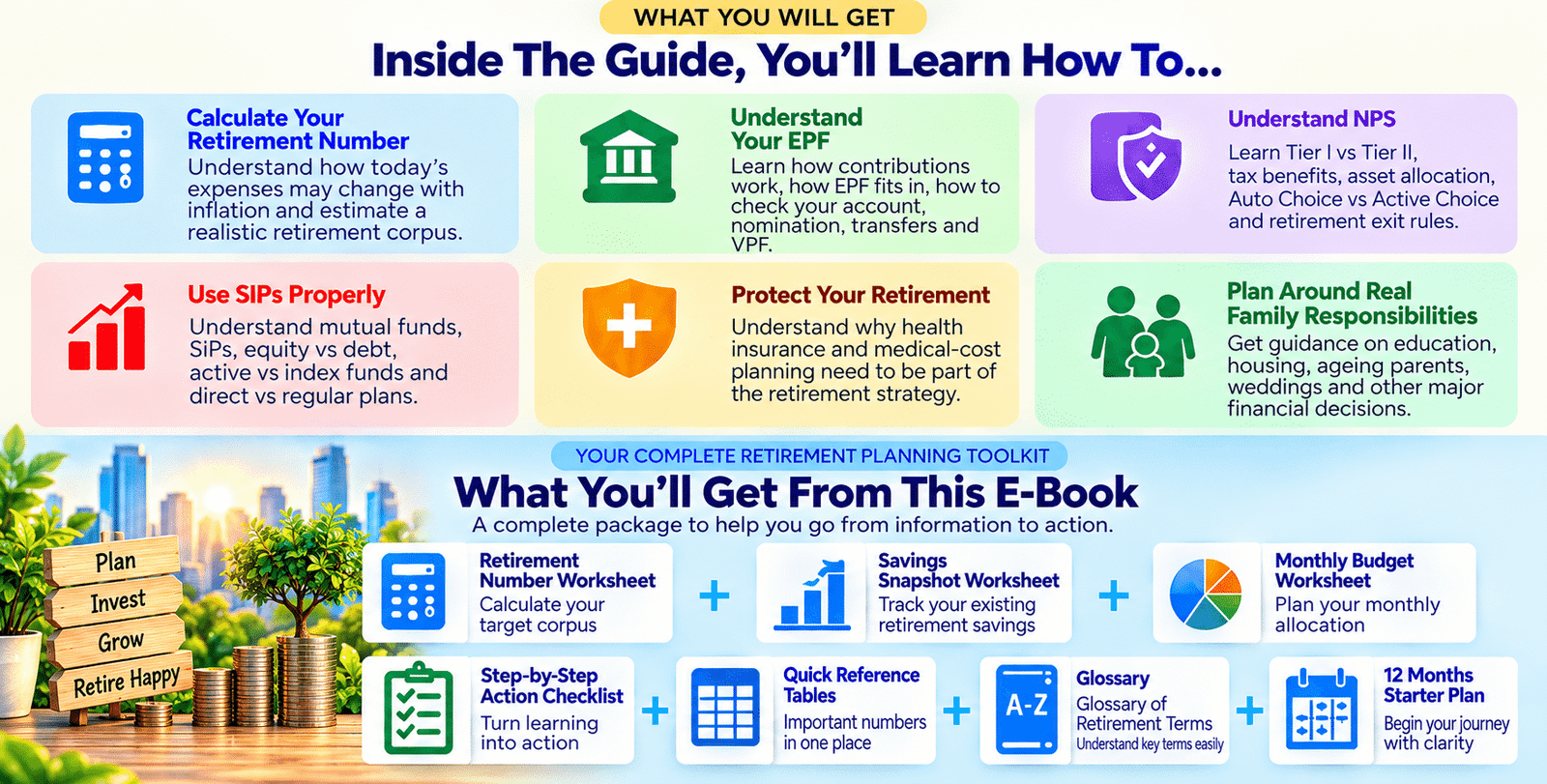
You’ll learn how to understand and plan around EPF, NPS, PPF, Mutual Funds, SIPs, retirement corpus, healthcare expenses, withdrawals, and estate planning, along with practical worksheets and action steps to help organize your retirement strategy.
It’s designed to help you start from where you are today. The e-book helps you understand your current financial position, estimate your future retirement needs, identify practical savings options, and create a realistic roadmap based on your income and family responsibilities.
No. The focus is on building a practical retirement system, not simply telling you to save unrealistic amounts every month. It helps you understand your income, expenses, existing savings, available retirement options, family responsibilities, and how these pieces can work together toward your long-term goals.
Ideally, retirement planning should begin as early as possible. Starting early gives you more time to build savings and investments gradually and prepare for changing expenses over the years.
Start by estimating your current household expenses, then consider inflation, healthcare costs, lifestyle goals, housing expenses, and the number of years you may need retirement income. Your expected pension or other income sources should also be considered.
Retirement planning should include a strategy for managing outstanding loans and other long-term obligations. Reducing high-cost debt before retirement can help lower the pressure on your post-retirement income.
Create a realistic retirement budget, review your expenses regularly, maintain an appropriate emergency reserve, and plan how you will withdraw money from your savings and investments. Your plan should also be reviewed periodically as your circumstances and financial needs change.